Normative Signs: The Poetry of "Ought"

In which the author finds beauty in how people tell other people what to do.

Can’t Touch This (Canoe)

canoe2There’s an entire category (in my head) of normative signs that tell people not to do things they are obviously going to want to do.

This one was taken in Hawaii, outside a popular restaurant situated in a busy tourist zone (on Maui). There were kids galore. You can imagine the temptation.

canoe

Cleanliness is NOT Next to Godliness

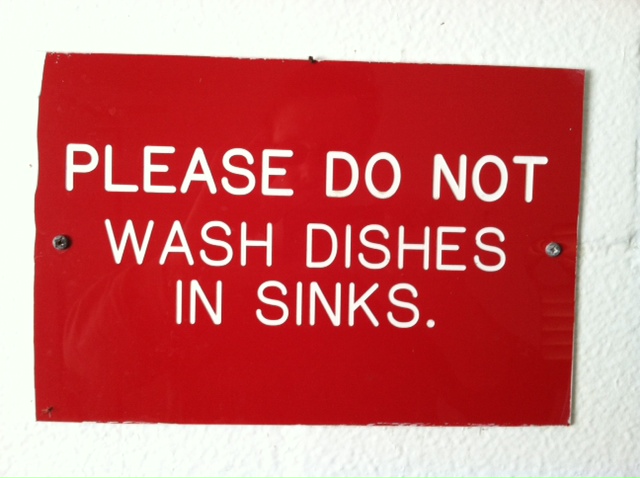
photoI don’t know about you, but most of the places I’ve ever been (worked, lived) people are heartily encouraged to do the dishes.

But I guess dishwashing is not welcome everywhere. This sign is in a public bathroom in Lieber State Recreation Area near Cagles Mill (or Cataract) Lake in Southern Indiana. (My guess is that food waste clogs the bathroom sink drains, or that people doing dishes take up more than their fair share of sink time.)

p.s., Thanks to Abe Schwab for the photo.

Warning: Extreme Danger

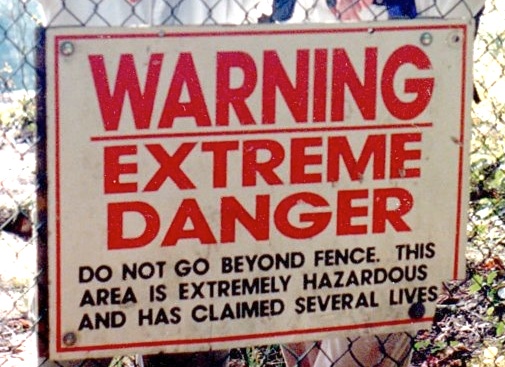
extreme_dangerOK, a bit of my own history. This is me (on the left) with my pal Eric Fruhauf, back in the early 90’s. The picture was taken at Capilano Suspension Bridge Park, in Vancouver, BC.

What can I say? The sign is clear. But we were in our 20’s, and it was just too tempting. Naturally, we didn’t go far past the fence the sign was on, and certainly nowhere near the genuinely-dangerous dropoff you can see in the background.
extreme_danger2

Men Overhead

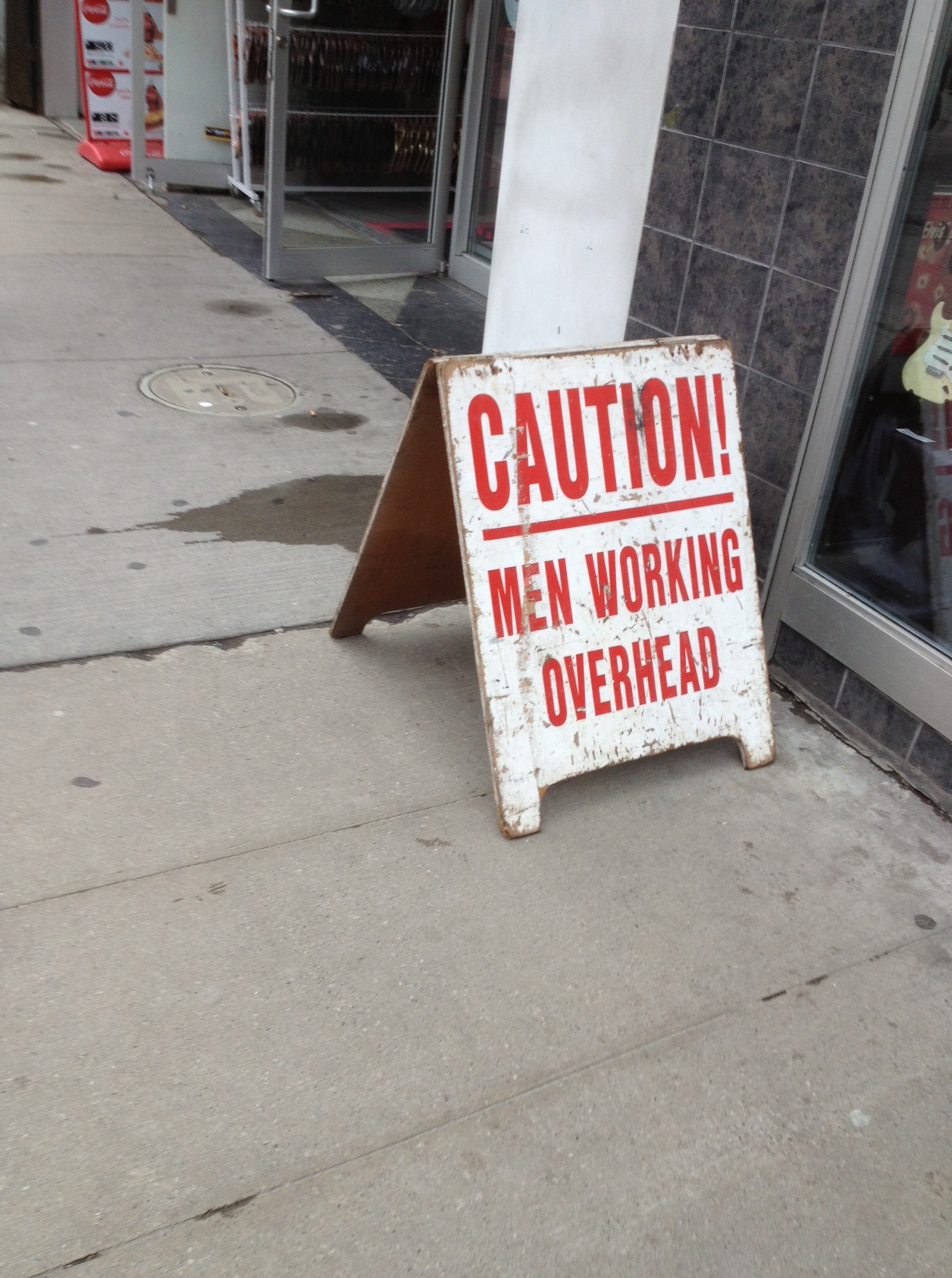
men_overheadThis was on a narrow and crowded sidewalk on Yonge Street in Toronto. There were, indeed, men (or rather one man) working overhead. (So the gendered language was accurate — this time.)

What am I actually supposed to do, faced with this sign? What does exercising caution look like here? Does it merely mean, say, not loitering on the spot, in order to minimize the chance that something might fall on my head? If that’s a real risk, then it’s a real risk to the hundreds of people who each spent a second or two walking through.

You Can Refuse to Donate!

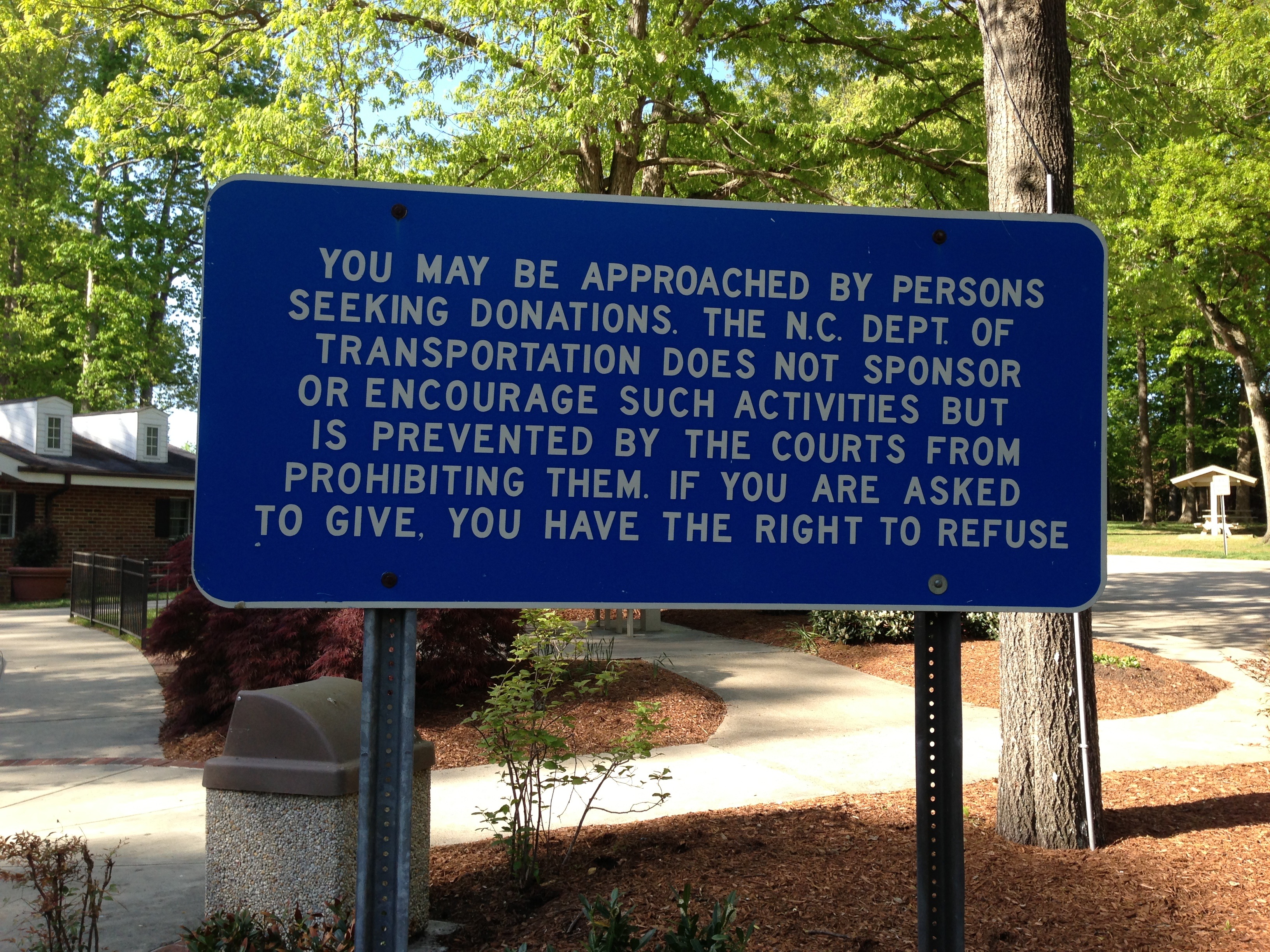
you_have_the_rightThis entirely amazing sign was sent by Wayne Norman.

Wayne tells me that this is at an official NC State Dept of Transport highway rest stop, 2 miles from the VA border on the I-85. It’s a weirdly verbose sign, and normatively complex.

As Wayne puts it:

They make it clear that they think something should be illegal, but that another branch of government won’t let them make it illegal. So they want to encourage you to take their normative attitude into your own hands, so to speak.

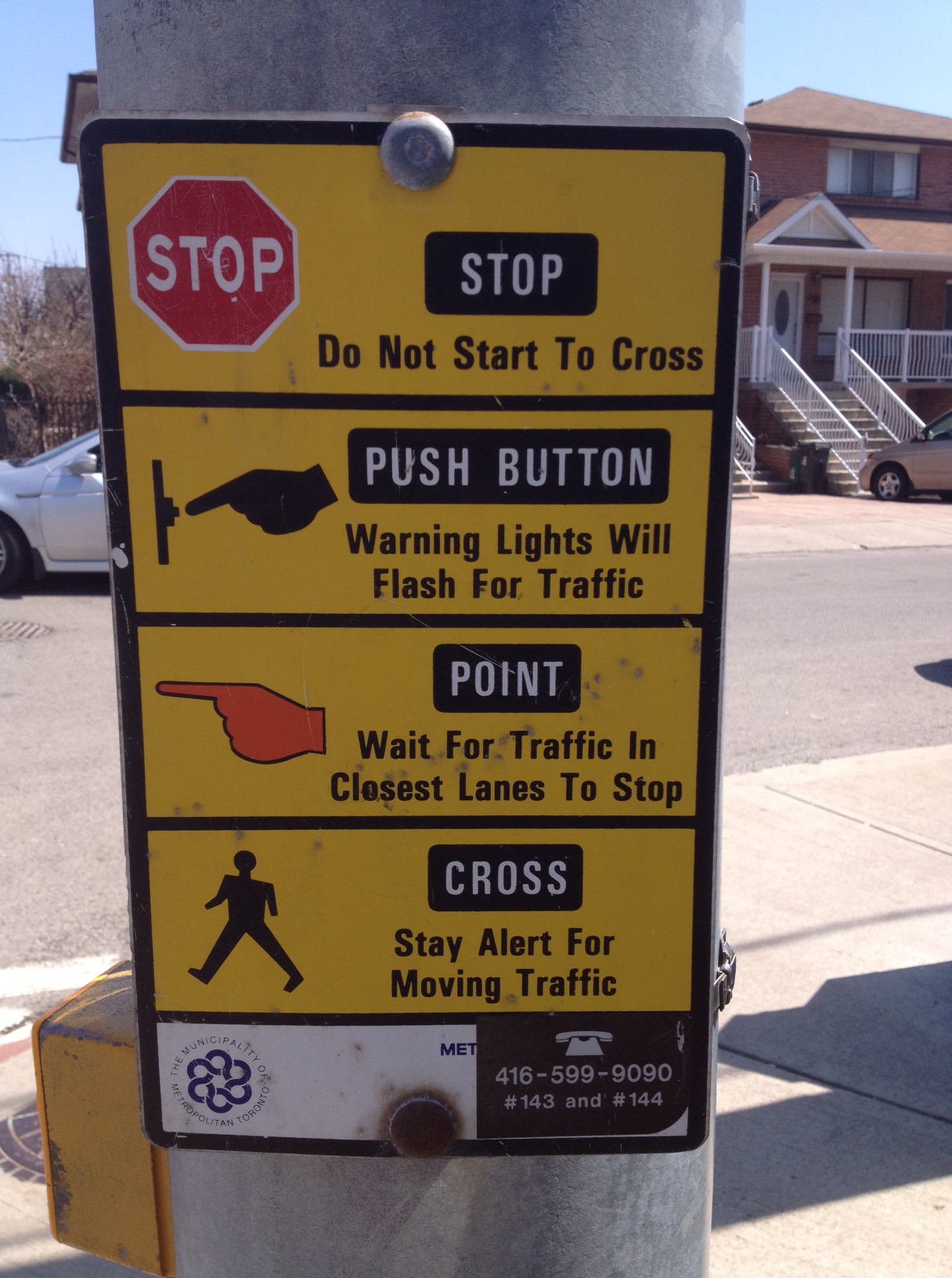
Stop, Point, Cross

stop_point_crossThis is at a crosswalk in Toronto. Not every crosswalk has them, but I’ve seen a few of them around.

On this blog, I’ve generally avoided signs that give instructions on how to do something. For my purposes, normative signs are ones that tell you that you should do something, period. The sign pictured here is a hybrid, I guess. It indicates how to cross the street safely — what procedure to follow — but also tells you in no uncertain terms that there are certain things you must do.

Interestingly, the procedure given on this sign is one I have literally never seen implemented by anyone here in Toronto.

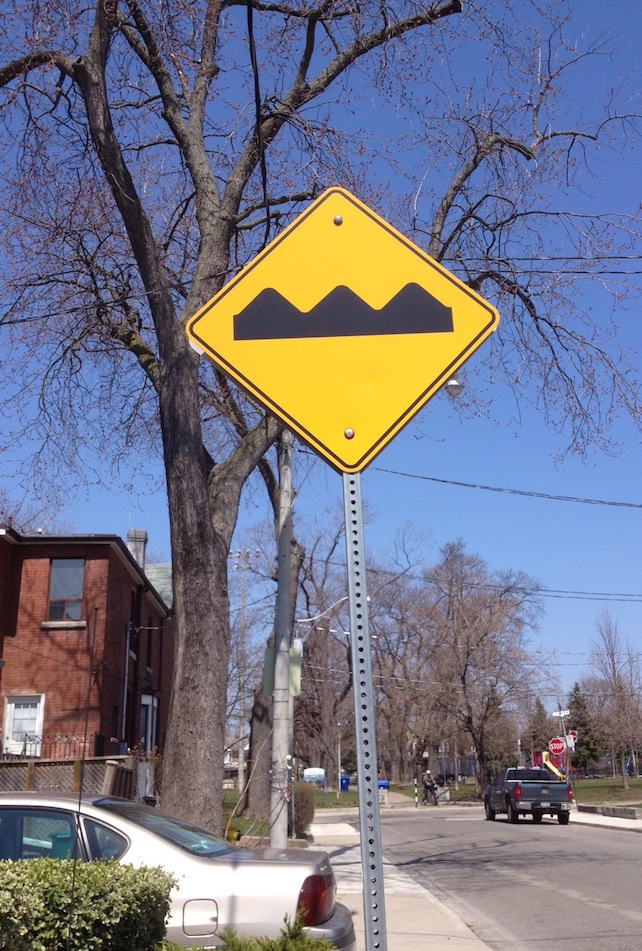
Speed-bump

speedbumpIs this a normative sign? Does it tell people what to do? In principle, it merely indicates the existence of a speed-bump. Whether you want to slow down (thereby avoiding damage to your car) is up to you. Functionally, though, it’s a command: slow down!

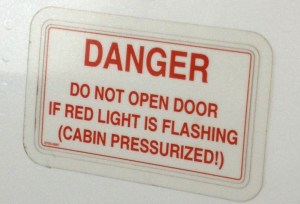
Do Not Open Door

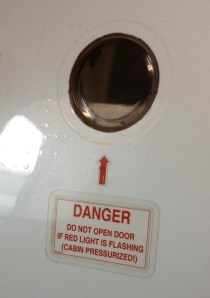
do_not_open_door_2As an airline passenger, I found this one generated more questions than it answered. It’s on the door of a large Air Canada jet (a 767, I think, but I could be wrong).

Just who is this aimed at? Under what conditions would I (or anyone) be reading this sign, from outside, while the red light is flashing? Is there some chance that someone qualified to be standing outside this door, while the light is flashing, someone with an understanding of how to open the door, wouldn’t also know when not to do so?

I’m sure there are perfectly reasonable answers to those questions. But as someone boarding a plane about to soar above the Pacific ocean, I gotta say I found them somewhat unsettling.
do_not_open_door

Golf Carts Only

golf_carts_only_2At the edge of a golf course, in Hawaii.

I can imagine several reasons for this sign. One is safety — if golfers are whipping around in motorized carts, perhaps pedestrians are safer staying away. It may also be a way of keeping tourists off the golf course generally; the course is next to a long beach-walk that runs for a couple of kilometres through several beachfront hotel properties. The little bridge in the picture below is an attractive place to stand and take pictures, which could make tourists an obstruction to golfers trying to drive across the bridge.

Interesting, though, in an age in which motorized methods of getting around are generally looked down upon as being less environmentally friendly.

golf_carts_only

Watch for Children

watch_for_childrenThis is a fun juxtaposition of normative signs. It has the appearance (but only the appearance) of irony, or contradiction, or something. On the one hand, drivers are told to watch for children. On the other hand, kids are forbidden from doing the things that would have them in drivers’ way in the first place.

Of course, both signs are probably the result of the same kids vs. cars turf war, a conflict which can be resolved in at least 2 ways, apparently.