No Entry
 I love this one, for some reason. It’s on an otherwise inviting door in a university hallway.
Simple. Succinct. Mysterious. What’s not to love?

I love this one, for some reason. It’s on an otherwise inviting door in a university hallway.
Simple. Succinct. Mysterious. What’s not to love?
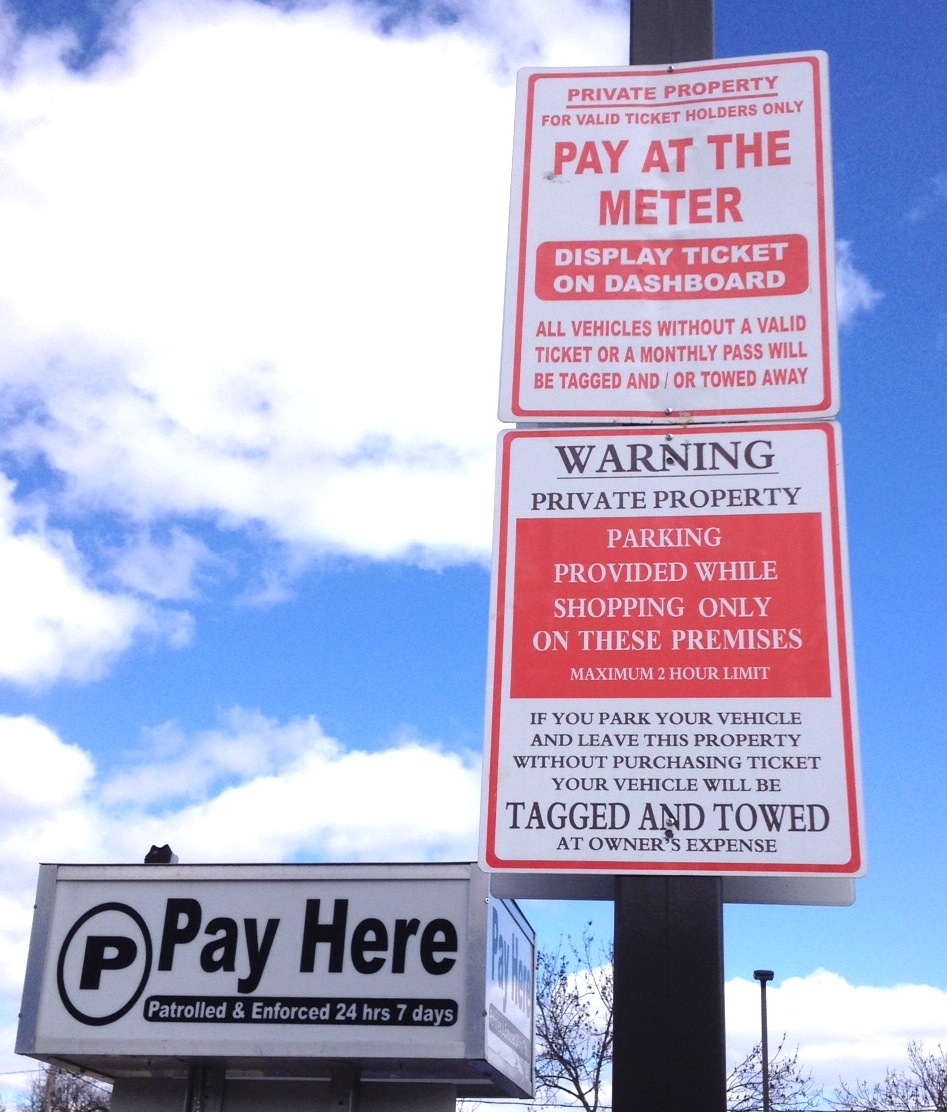 This is at a grocery store near my house. It directs people to pay for parking. And it notes that parking is for shoppers. But what’s less clear is that parking is free if you’re shopping. So I regularly see people standing staring at the sign, trying to interpret what it means, whether it applies to them, etc.
 This one (from on Queens Quay in Toronto) is interesting for two reasons. One is the odd wording (infinitive, rather than a more standard imperative).
Perhaps more obviously weird is the use of the tragic word (and apparently it is a word), “signalized.” It’s certainly an awkward term, although this online dictionary says that signalized is indeed a word. I suspect very few people seeing this sign know the definition of the word, but I also suspect few fail to understand the sign’s meaning.
(Thanks to Andrew Crane for the picture, and for pointing out the unusual grammar.)
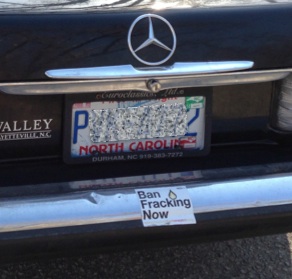 This blog is generally about public signs, posted by institutional authorities — governments, universities, business corporations, etc. — to get people to do (or not do) things. So bumper stickers are not really in my wheelhouse. But I’ll make an exception for this one. This was sent by Wayne Norman.
The injunction, here, is to “Ban Fracking.” The message, unfortunately, is somewhat diminished by the fact that the sticker is on a luxury sedan coupe. Of course, being hypocritical is not the same as being wrong.

 This one seems appropriate in the wake of a holiday weekend.
It is of course common for children to ride in shopping carts. Most shopping carts indeed have “seats” built into them specifically for that purpose. The cart pictured above, though, is tiny and tippy, and doesn’t have a built-in seat, and definitely is not safe for kids to ride in.
There’s also a bit of humour in knowing what kind of store this was in. Here’s a bit of context:
 Yes, a liquor store.
 This is a picture of a warning sign inside the gears of an escalator in the building I work in. The escalator was under repairs.
The sign seems a bit like overkill, doesn’t it? It’s hard to imagine anyone being remotely tempted to stick their fingers into the gears of a machine capable of lifting a few thousand pounds of human beings.
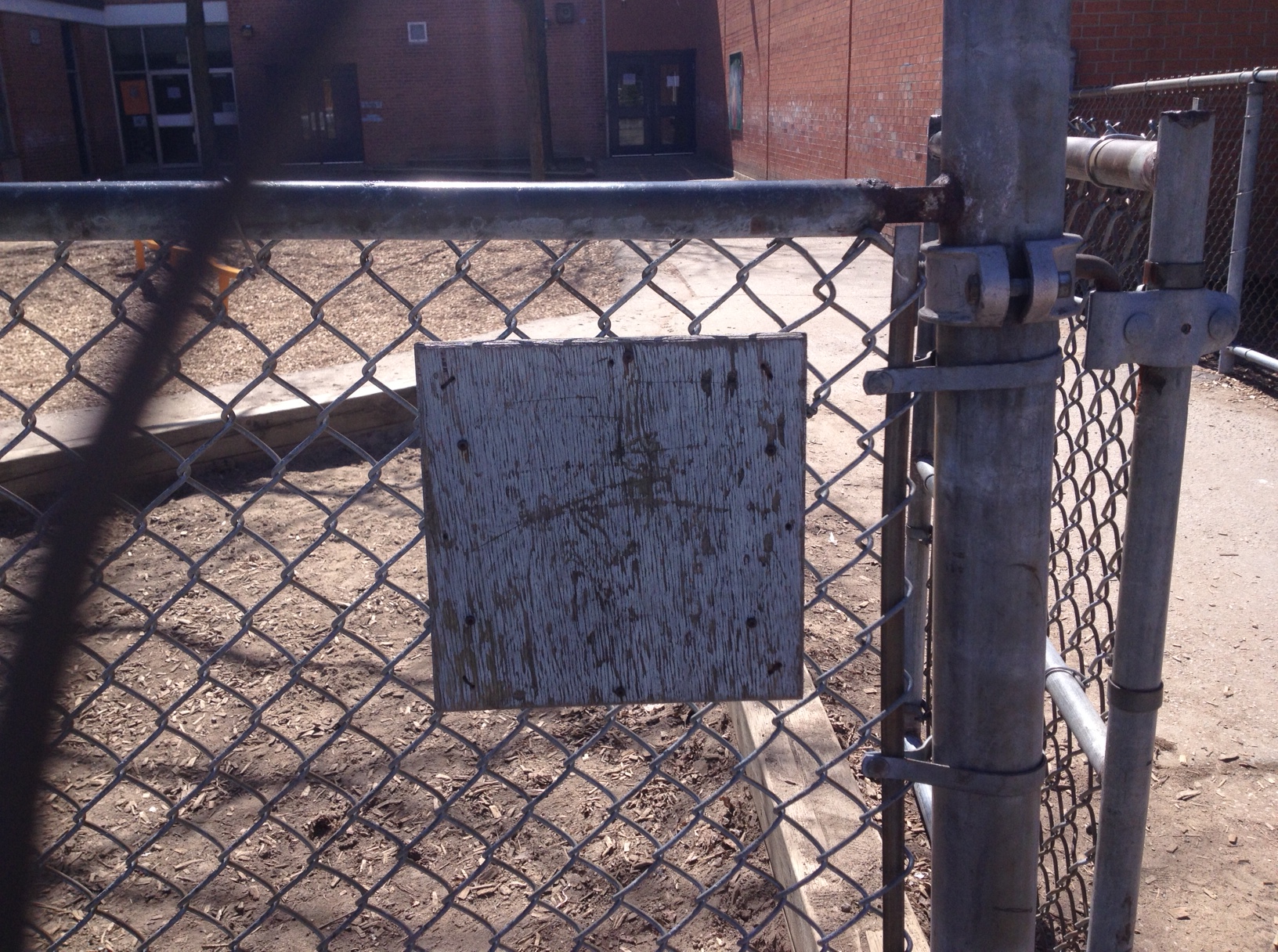 Here’s a sign (or rather, a “sign”) posted on the fence of a Toronto school.
Presumably whatever it once said was not important enough to warrant keeping the sign legible. Of course, in posting this pic, I’m assuming that whatever it was said was something normative. It’s size and location make that a reasonable assumption, I think.
I suppose this sign is roughly as informative as yesterday’s sign.
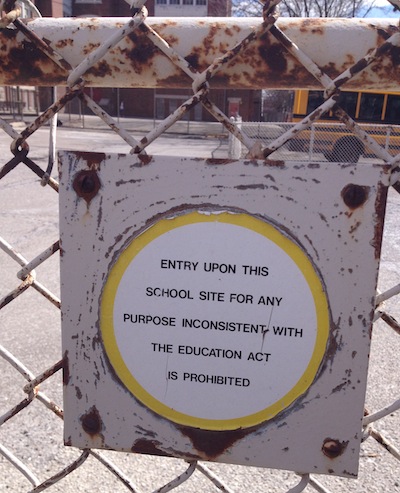 This one is on a fence around a Toronto school. It says “Entry upon this school site for any purpose inconsistent with the Education Act is prohibited.”
Wow. I realize that ignorance of the law is no defence, but do they actually think anyone reading this sign is going to be familiar with the Education Act and its requirements? This is clearly what you get when you allow lawyers to make signs.
Addendum:
I guess from a normative point of view, the goal here is to make the sign emphatic, by pointing to legislation. And maybe, at some basic level, that could work. But I wonder if it actually informs behaviour, when so few people will know just what’s in the relevant legislation, and hence just what the sign is actually prohibiting.

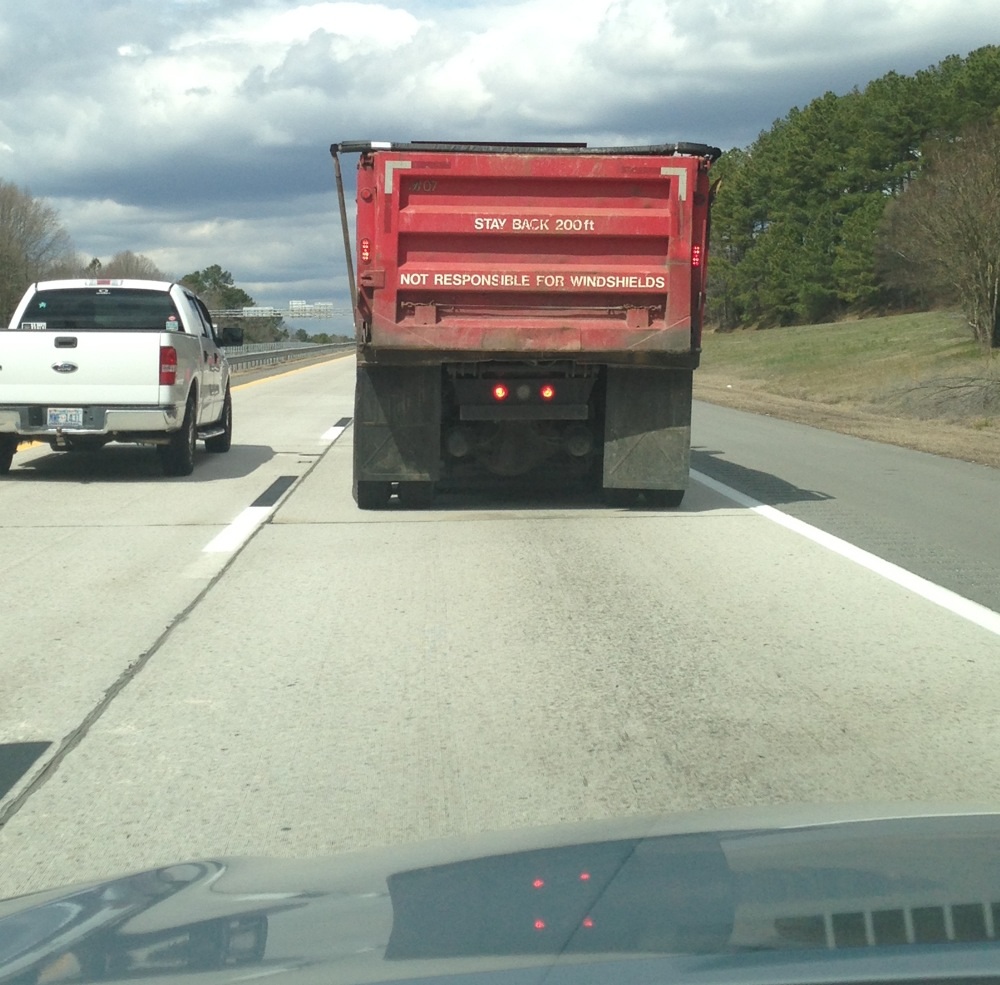
Wayne Norman sent this one, of a truck on a highway in North Carolina. I like the two-part message. First, the advice: “Stay back 200 ft.” Ok, good advice (even if not heeded often). Big trucks often kick up stones that can crack windshields. So far so good.
Then comes the disclaimer: “Not responsible for windshields.” That part raises questions! Who says the driver (or owner?) of the truck is not responsible? Is that a claim about legal liability? And if so, is it true? And does it mean strictly not responsible, or not responsible if you don’t heed the advice about keeping your distance?
 This seems like a reasonable suggestion. Or a reasonable request, I suppose.
Posted at a drinking establishment near my house — at the top of the stairs leading down to the basement washroom.
 Normative Signs: The Poetry of "Ought"