Normative Signs: The Poetry of "Ought"

In which the author finds beauty in how people tell other people what to do.

Month: May, 2013

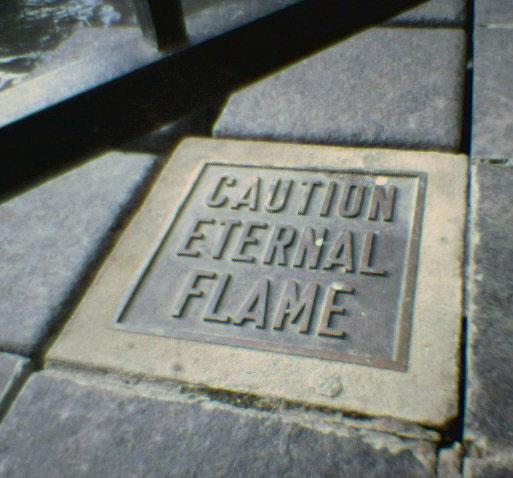
Eternal Danger

eternal_flame

Thanks to Paul Gorbould for this one.

It’s a plaque by the “eternal flame” in the Peace Garden outside Toronto’s City Hall. As Paul points out, it’s a safety warning “in classy, timeless brass.”

Paul goes on to say: “What I find striking is the decision to include the adjective. Is an ‘eternal’ flame more dangerous than a ‘normal’ flame? Practically speaking, it’s probably less dangerous — it has always been there and always will be. At least it’s predictable.”

Danger: There’s an Obvious Danger Here!

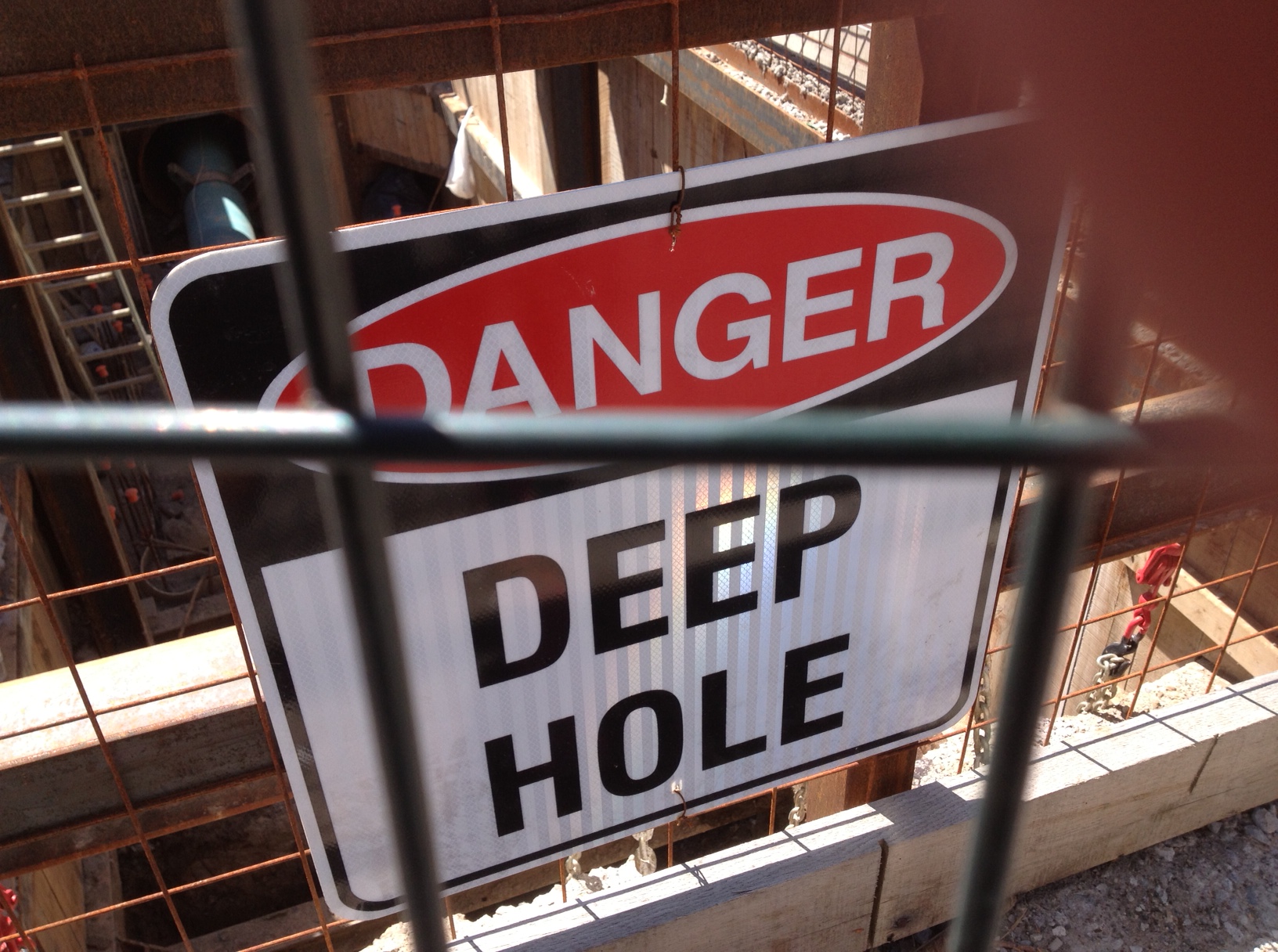
deep_holeThis one is fun. It points out something terribly obvious — namely that there’s a very large hole in the street, maybe 10 feet wide and 20 feet long and 12 feet deep, and then adds the strikingly obvious fact that this giant hole constitutes a danger to pedestrians.

Oh, and note not one but two layers of fence between pedestrians and the dangerous, deep hole.

Interestingly, the normative conclusion — “stay away” — is left implicit.

Walk Left, Stand Right

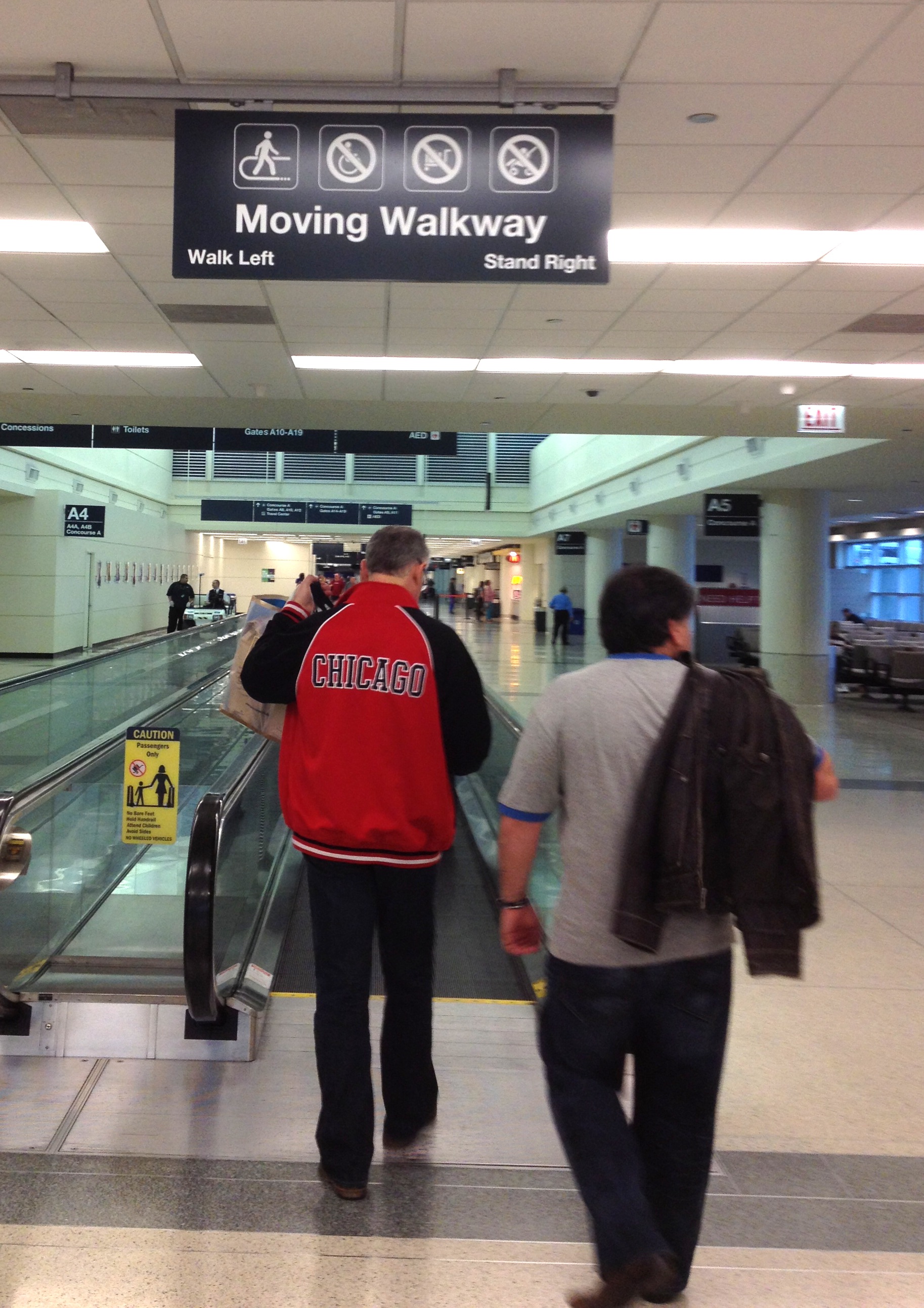
Walk_leftThis is an example of an incredibly important category of normative signs, namely signs that promote adherence to a mutually advantageous coordinative convention. Ignore the pictograms at top, forbidding wheelchairs, etc. Focus on the words at lower left and lower right.

It’s not clear that walking on the left side of the moving sidewalk, and standing on the right, is anything like a rule in the strongly prescriptive sense. It’s just a good idea. Everyone — walkers, standers, and those sprinting to catch their flight — benefit if the standers squeeze to the right, allowing those in a hurry to hustle past. Technically speaking, it’s an equilibrium strategy for a social coordination game.

In some places, this convention is taken for granted, part of normal social expectations. In other places, like an airport with international flights, a nudge is a good idea.

This picture was taken at Midway airport, in Chicago.
Walk_left2

Please Don’t Die

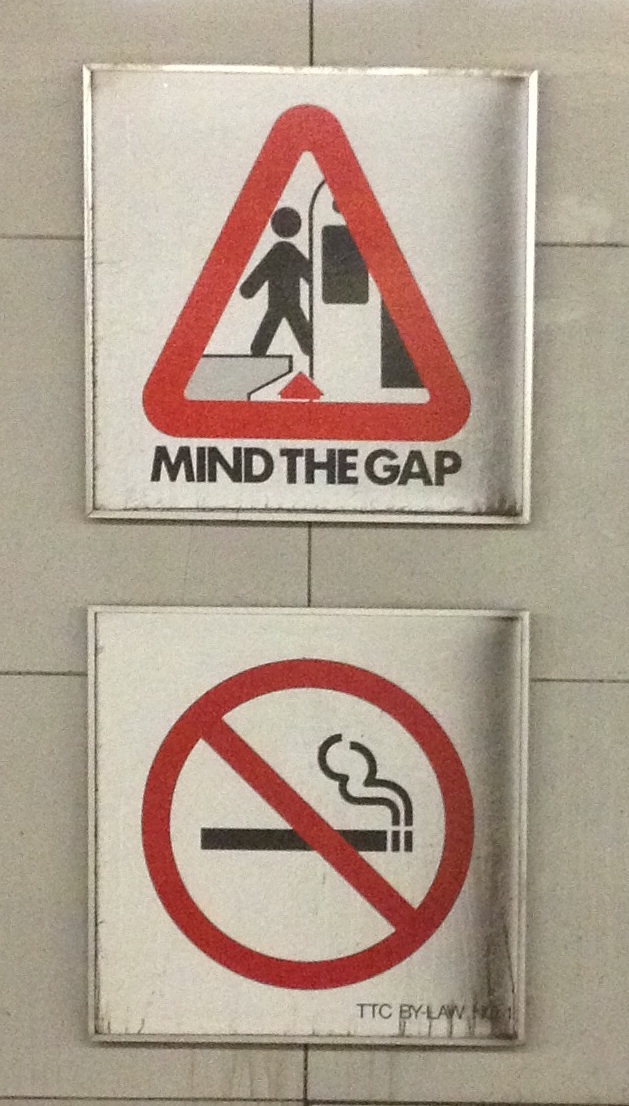
dont_die2This is in a subway station in Toronto. It’s the pairing of signs (I don’t know whether it is intentional or not) that I find interesting.

In essence, the authorities who posted these two signs are effectively asking people not to kill themselves in either of two ways — one fast, one slow.

More seriously: it’s also interesting that the normative force behind these two signs is quite different. The lower one — No Smoking — has the force of law, and is backed by fines. The upper one — Mind the Gap — is “merely” very very good advice. Does pairing them like this have some effect on the psychological force of one or the other?

dont_die

Walk Up One Floor

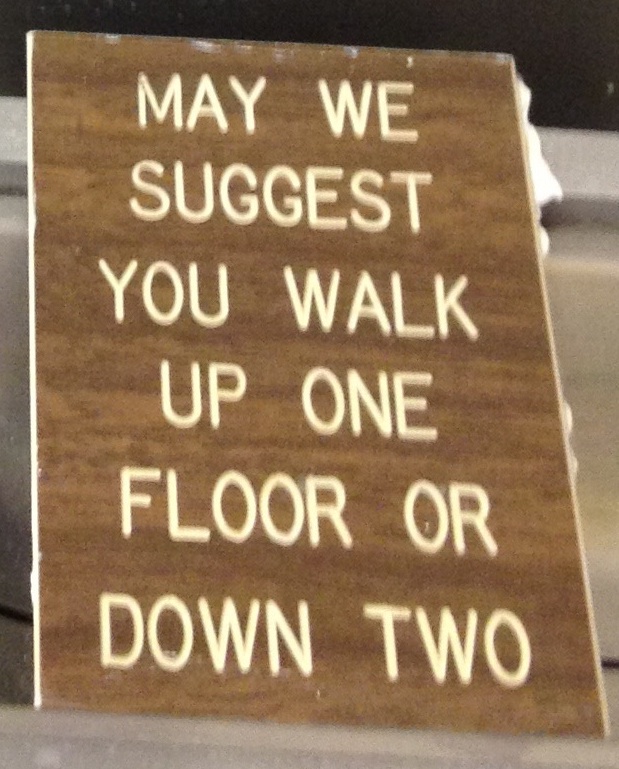
walk_one_floorThis one is pretty much the exact opposite of the one I posted yesterday, which mysteriously encouraged people to use the elevator. This one, posted outside a university elevator, encourages people to walk instead. (Actually, as you may be able to tell from the photo, the sign when photographed was no longer posted, but had rather fallen or been removed, and was now propped on a long-defunct ashtray.)

The sign itself is interesting in two ways.

First, there’s the oh-so-polite, “May we suggest….” It’s good to be polite, here, because after all the elevator is right there to use, and is for many the default, and besides some people aren’t able to use stairs.

Then there’s the very specific suggestion that, if you’re heading up a flight, you can probably manage that, but that if you’re going down, you could probably do two flights. It’s a nice, principled distinction, and also a moderate one: the makers of the sign aren’t just saying you should take the stairs, regardless, but recognizing that going up stairs is (for most people) more difficult than down.

Please Use Escalator or Elevator

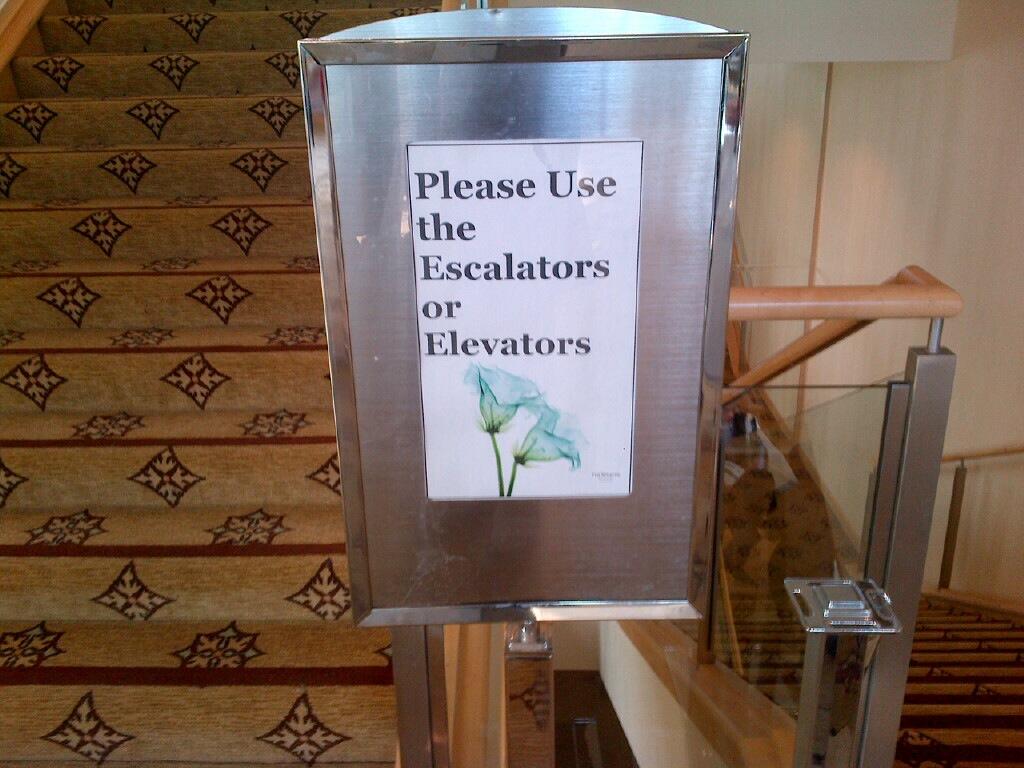
please_use_elevator2This one was spotted at the Canadian Obesity Network Summit, by Dr. Yoni Freedhoff.

That is, as Yoni pointed out, a rather odd place to see such a sign. There, or anywhere. In fact, it’s hard to imagine the purpose behind such a sign. Anyone got a guess? Is the hotel trying to save wear and tear on the carpeted stairs?
please_use_elevator

Can’t Touch This (Canoe)

canoe2There’s an entire category (in my head) of normative signs that tell people not to do things they are obviously going to want to do.

This one was taken in Hawaii, outside a popular restaurant situated in a busy tourist zone (on Maui). There were kids galore. You can imagine the temptation.

canoe

Cleanliness is NOT Next to Godliness

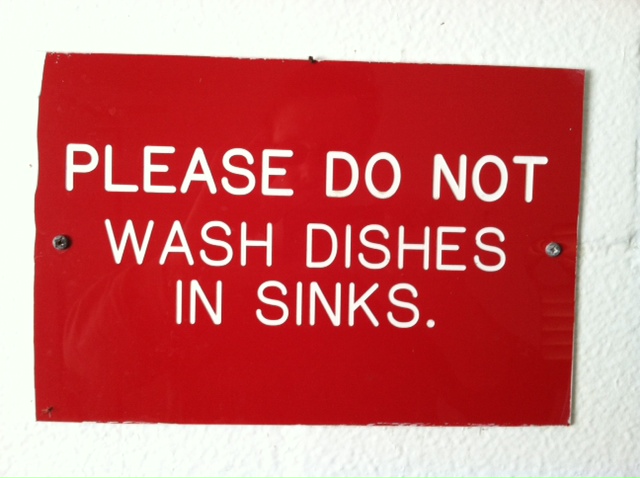
photoI don’t know about you, but most of the places I’ve ever been (worked, lived) people are heartily encouraged to do the dishes.

But I guess dishwashing is not welcome everywhere. This sign is in a public bathroom in Lieber State Recreation Area near Cagles Mill (or Cataract) Lake in Southern Indiana. (My guess is that food waste clogs the bathroom sink drains, or that people doing dishes take up more than their fair share of sink time.)

p.s., Thanks to Abe Schwab for the photo.

Warning: Extreme Danger

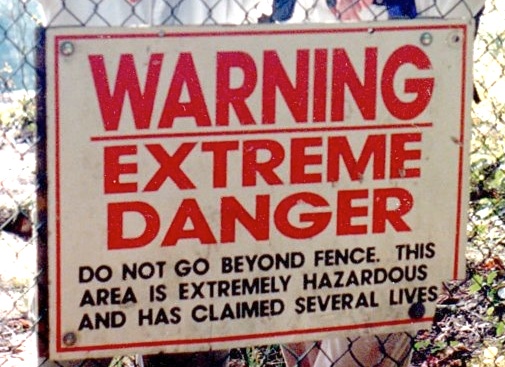
extreme_dangerOK, a bit of my own history. This is me (on the left) with my pal Eric Fruhauf, back in the early 90’s. The picture was taken at Capilano Suspension Bridge Park, in Vancouver, BC.

What can I say? The sign is clear. But we were in our 20’s, and it was just too tempting. Naturally, we didn’t go far past the fence the sign was on, and certainly nowhere near the genuinely-dangerous dropoff you can see in the background.
extreme_danger2

Men Overhead

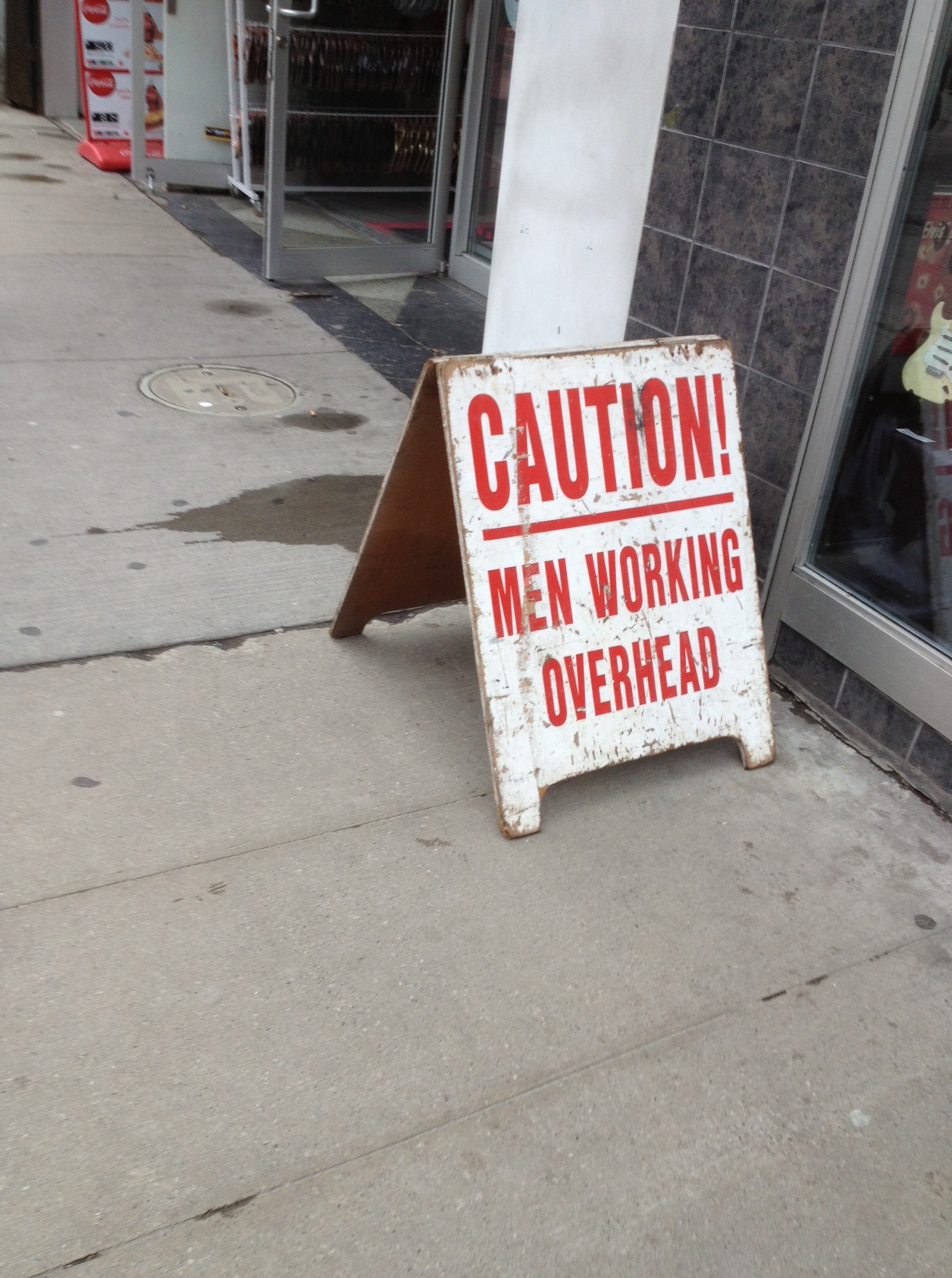
men_overheadThis was on a narrow and crowded sidewalk on Yonge Street in Toronto. There were, indeed, men (or rather one man) working overhead. (So the gendered language was accurate — this time.)

What am I actually supposed to do, faced with this sign? What does exercising caution look like here? Does it merely mean, say, not loitering on the spot, in order to minimize the chance that something might fall on my head? If that’s a real risk, then it’s a real risk to the hundreds of people who each spent a second or two walking through.