Normative Signs: The Poetry of "Ought"

In which the author finds beauty in how people tell other people what to do.

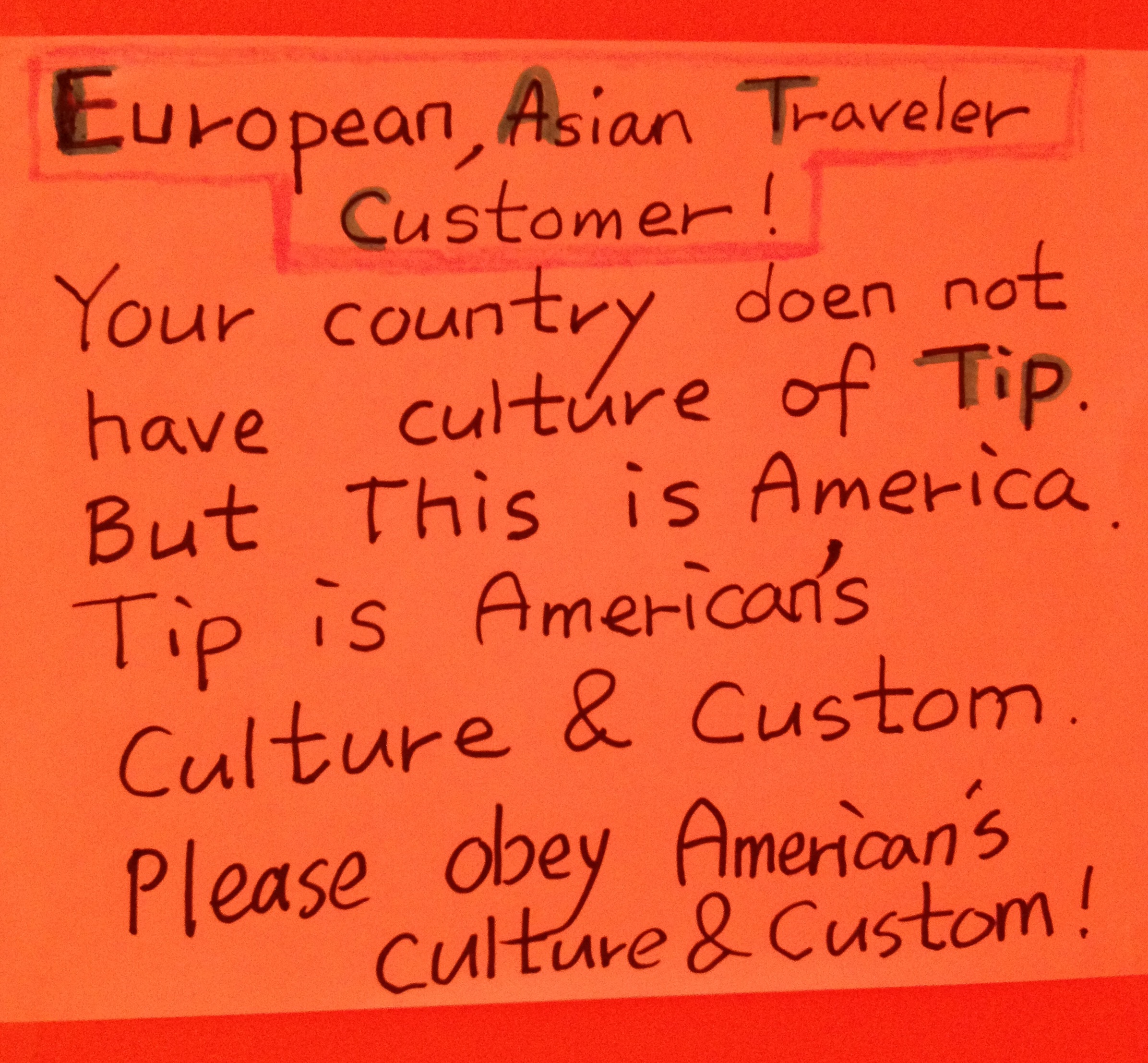
Obey Our Customs, Please!

please_tipHand-written normative signs are a very special category of their own. This one was on the wall of a massage therapist’s office in Washington, DC. It’s an interesting plea. After all, what decent traveller doesn’t want to respect local culture & customs?

Thanks to Peter Jarowski for sending this one.

All Are Welcome

all_are_welcomeYou might say this sign is normative, but definitely not heteronormative. This is a church on P Street in Washington, DC.

Actually, is this a normative sign? I usually think of normative signs as giving categorical instructions: “Do this,” or “Don’t do that.” Thus a bumper sticker or political slogan isn’t a normative sign in the relevant sense (i.e., the sense this blog is interested in) because it doesn’t offer specific instructions, but merely implies support for a point of view. In a way, the sign pictured here is in a way more like a Welcome matt. But the rainbow implies not just an expression of solidarity, but also a kind of targeted invitation: “You — yes you — should come worship here.”

(Thanks to Wayne for the pic.)
all_are_welcome_2

Control Your Dogs

control_dogs

Here’s another from Samantha Brennan. This time it’s a sign posted near a walking trail in Yorkshire, UK. It’s noteworthy for its politely conversational tone, as well as for the fact that the sign conjoins an injunction — “please control your dogs” — with a handy suggestion for how you might go about doing that (by keeping your dog on a leash).

Stair Railings and Bikes

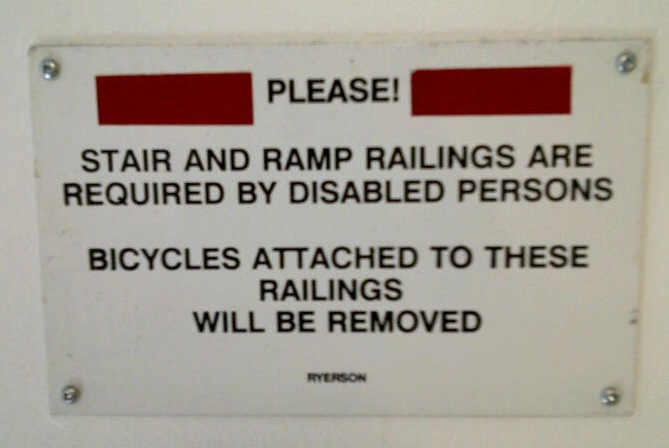
Toronto-20130422-00614Here’s a sign posted on a university building. It’s a sign with a lot going on.

First, there’s the polite “please.” Wait, make that an emphatic “please,” with an exclamation mark.

Next, this is a sign in a category that interests me, namely signs that provide a reason for what they ask you to do or not to do. This sign points out that there’s a good reason not to lock your bike to the stair railings, namely that some people actually rely on such railings as aids to mobility.

Finally, there’s a threat: if you do lock your bike, it well be removed. (And then what? Is the vagueness part of the threat?)

Thanks to Nancy Walton for sending the picture.

Notice: Not an Exit

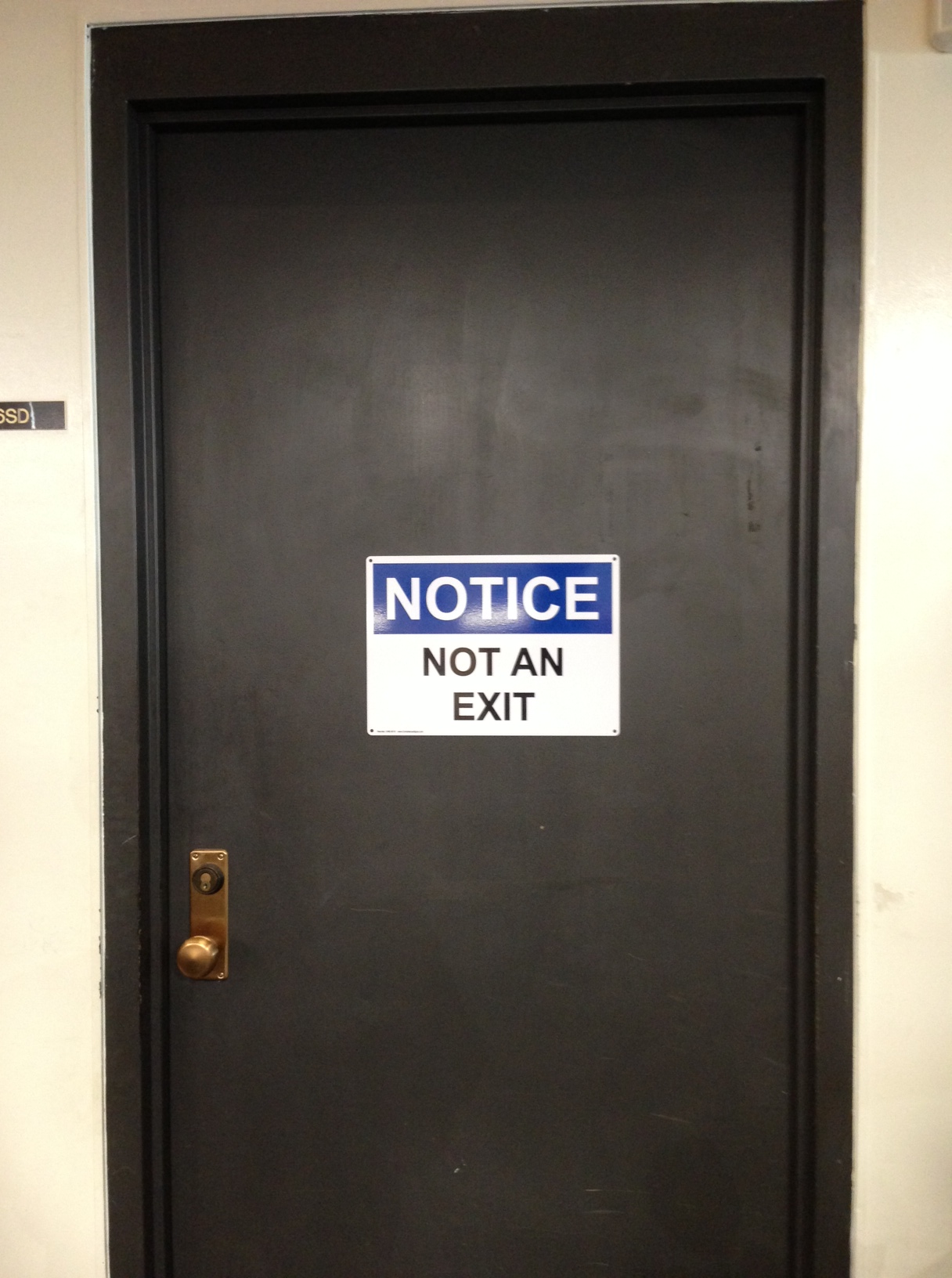
not_an_exitThis one was sent to me by Wayne, who rightly wondered why this sign needed the word “NOTICE” at the top. I suppose that header might make sense in a context in which people are primed to expect notices to be labeled as such (perhaps to differentiate them from other kinds of signs, such as how-to signs or nameplates).

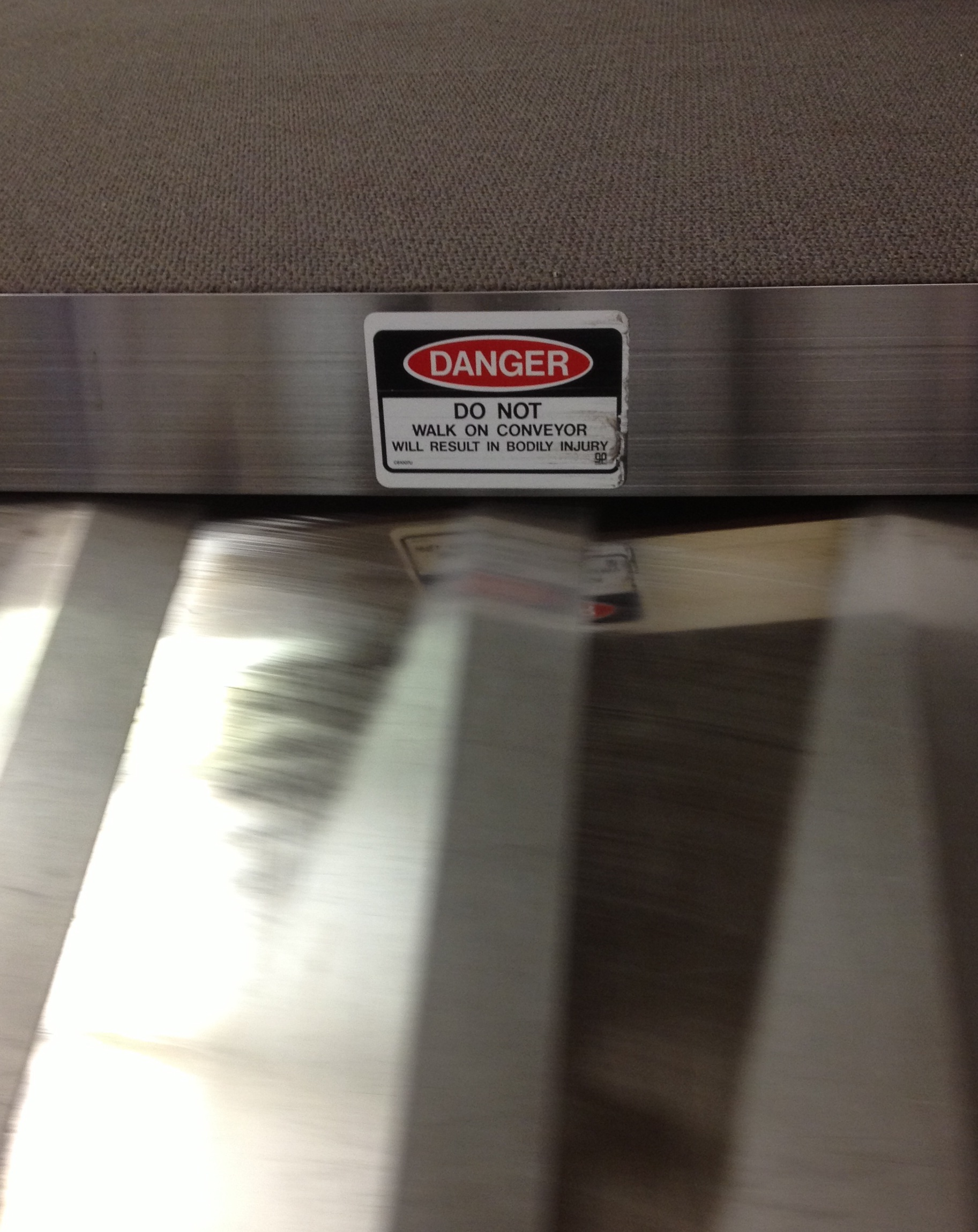
Walking on Conveyor WILL Result in Injury

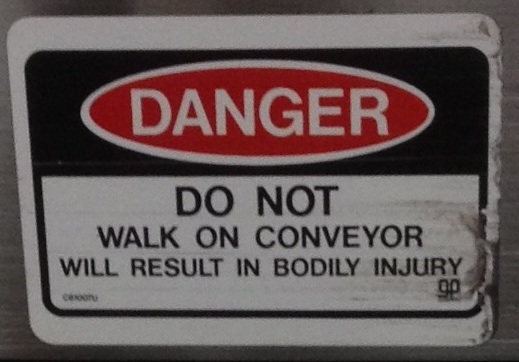
conveyor_2This one is from the baggage carousel at an airport. I like the fact that it asserts so confidently that walking on the conveyor will result in bodily injury. It kind of reads like a threat.

conveyor

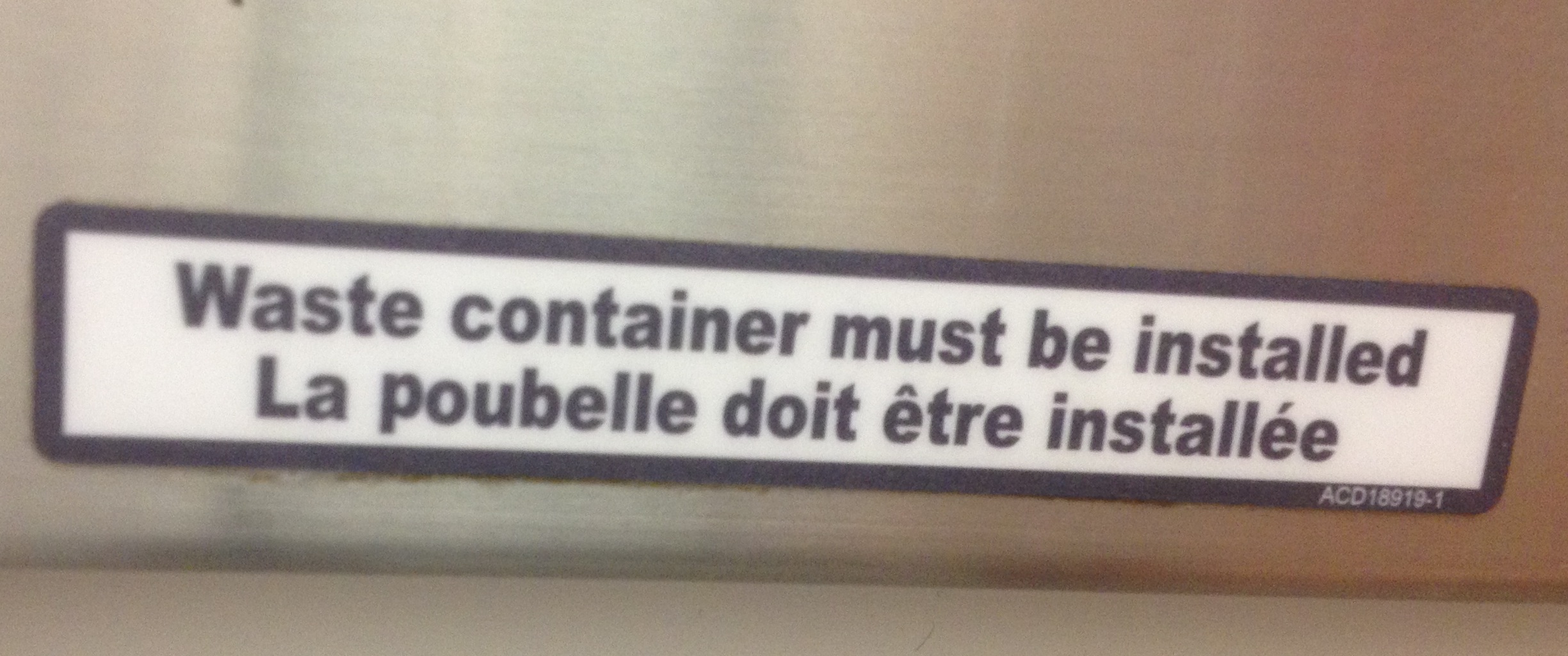
Who, Me?

waste_containerThis is an odd one from I saw during a recent flight. It’s very prominently displayed in an airplane bathroom — an environment replete with normative signs. But, oddly, it’s presumably not directed at passengers, who presumably have no obligation to install waste containers.

Polite Notice, Dammit!

polite_noticeThis one is from Samantha Brennan. It’s posted at the University of Sheffield’s conference housing.

I like the fact that this sign actually asserts that it is, in fact, a polite notice. I guess the “thank you” at the end wasn’t enough.

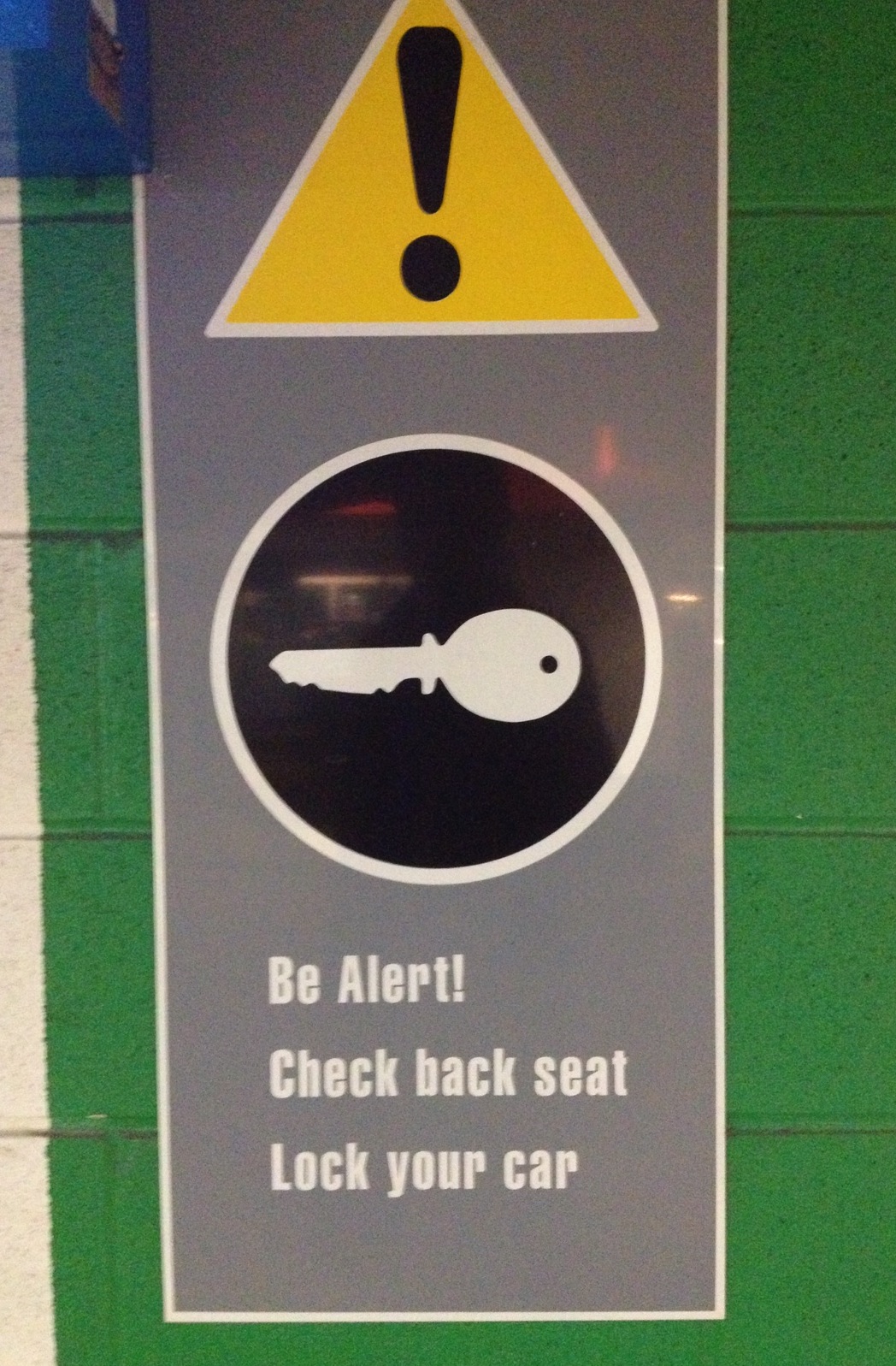
Check Back Seat

check_back_seatThis sign is in the parking garage under the building I work in.

I guess it’s a warning designed to help you avoid being carjacked.

If so, it’s a crazy sign. Car jackings are virtually unheard of here in Toronto, as far as I know.

Gained in Translation: Solidarity

courtesy2After I posted on the bathroom courtesy sign in airline bathrooms, Wayne Norman sent me this similar-but-different sign, which is in the bathroom on an old American Airlines MD-80.

The sign I originally posted (reproduced below — click to enlarge) asks people to wipe the counter as a courtesy to the next customer. The one above, sent by Wayne, makes the same request. What’s interesting is the French version on each. On the sign below, the translation says, roughly:

“Out of respect for other users, please wipe the sink before throwing away your towel.”

The French version on the sign above, however, is quite different — different from the first French translation, and quite different from the English, too. What it says is roughly this:

“This sink is for the common use of travelers. A simple wipe of the towel will maintain its cleanliness.”

In this version, wiping the counter isn’t just courtesy; it’s a matter of solidarity among people using a shared resource.

Kudos to Wayne for sticking around to take this picture for me, in spite of the other red normative sign apparently flashing at him at the time!
courtesy