Normative Signs: The Poetry of "Ought"

In which the author finds beauty in how people tell other people what to do.

As a Courtesy to the Next Passenger

courtesyThis is arguably my favourite normative sign ever, and perhaps the one that inspired my interest in the topic. (Click the image to enlarge!) It’s from the bathroom of an Air Canada jet. It’s a sign over the sink that says, “As a courtesy to the next passenger, may we suggest you use towel to wipe off the wash basin.”

I love this because of the way it appeals to courtesy in what is otherwise a highly normative and indeed highly regulated environment. A passenger jet is just abuzz with injunctions and limits and prohibitions and admonitions. All sorts of stuff is just plain forbidden. But in the bathroom, along with various prohibitions (e.g., tampering with the smoke detector!) is this one lovely suggestion that you might just want to do something courteous for the next person to use the facilities.

Elevator Capacity

elevator_capacityElevators standardly have signs like this one, indicating maximum number and weight of passengers. This is good information, on the face of it. No one wants the elevator they’re in to fail. In this context, it seems like a normative sign, rather than a sign that merely provides information.

But just how is anyone supposed to act on the maximum weight? Does anyone ever poll the crowd, gathering individual weights and summing them?

Child Safety & Reason-Giving

child_safetyI’m especially fond of normative signs that give reasons for their injunctions. I suspect that one side effect of the sheer volume of normative signs in our lives is that we tend to ignore them; so at least some sign-posters try to emphasize that their signs are not arbitrary, but grounded in reasons we all care about. This one is on the gate of a preschool near my house.

Danger, Danger: High Voltage!

high_voltageI guess if it’s worth doing, it’s worth overdoing. But surely this is overkill. Or it should be. How much warning should anyone need to stay away from high voltage? This is the door of an electrical substation in my neighbourhood. Any one of those warnings ought to be enough. It’s electricity, OK? Stay the hell out!

See also: “Danger, Danger: High Voltage!” by Electric Six.

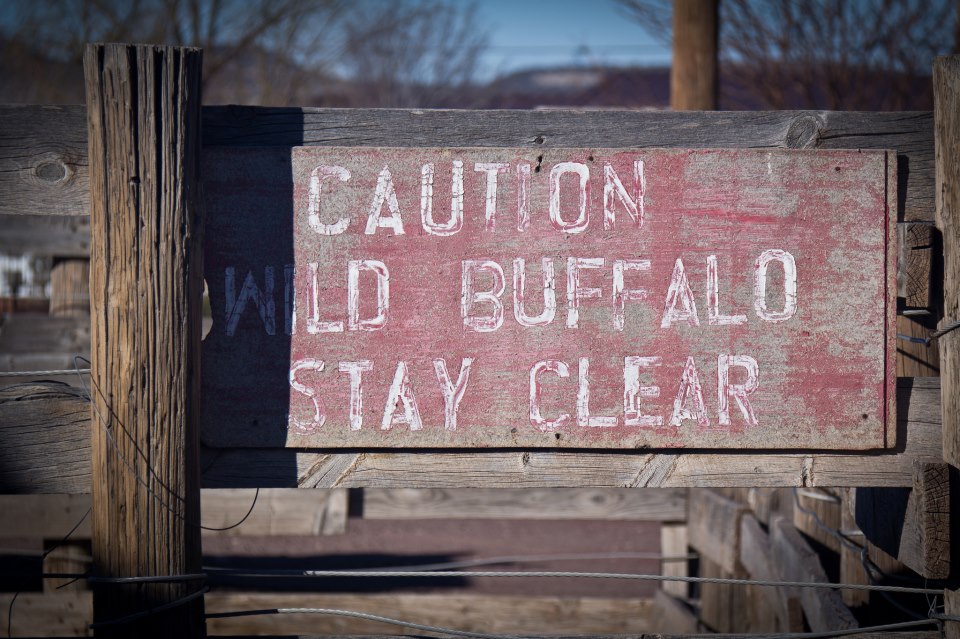
Caution: Wild Buffalo

caution_wild_buffaloThis one was sent to me by Paul Gorbould. “Not a sign you encounter every day,” Paul notes. “Unless you live in Seligman, AZ” (where the picture was taken).

And one would hardly think that anyone sane would need to be warned to stay away from large animals with horns. But tourists are not always sane, nor prudent. I guess there are people for whom this is genuinely important advice. Yes, they’re fuzzy animals, but not the petting kind.

No Crocs, Hong Kong Edition

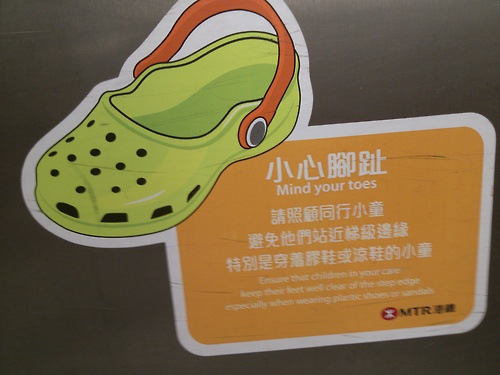
Hong_Kong_CrocsI blogged a sign last month warning wearers of Crocs about the peril they face.

Apparently it’s not just a Canadian thing.

This picture was taken in Hong Kong, and was sent in by Julien Bissonnette. (You can see other Hong Kong signs as shot by Julien here.)

The sign says:

Mind your toes.
Ensure that children in your care keep their feet well clear of the step edge especially when wearing plastic shoes or sandals.

No mention of Crocs, but the image accompanying the words is pretty clear.

“No” Bicycle Parking Allowed

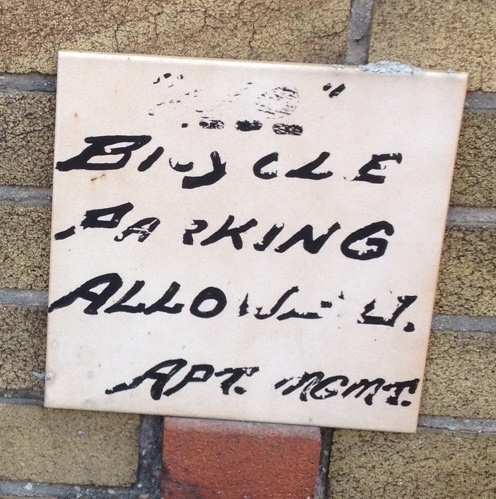
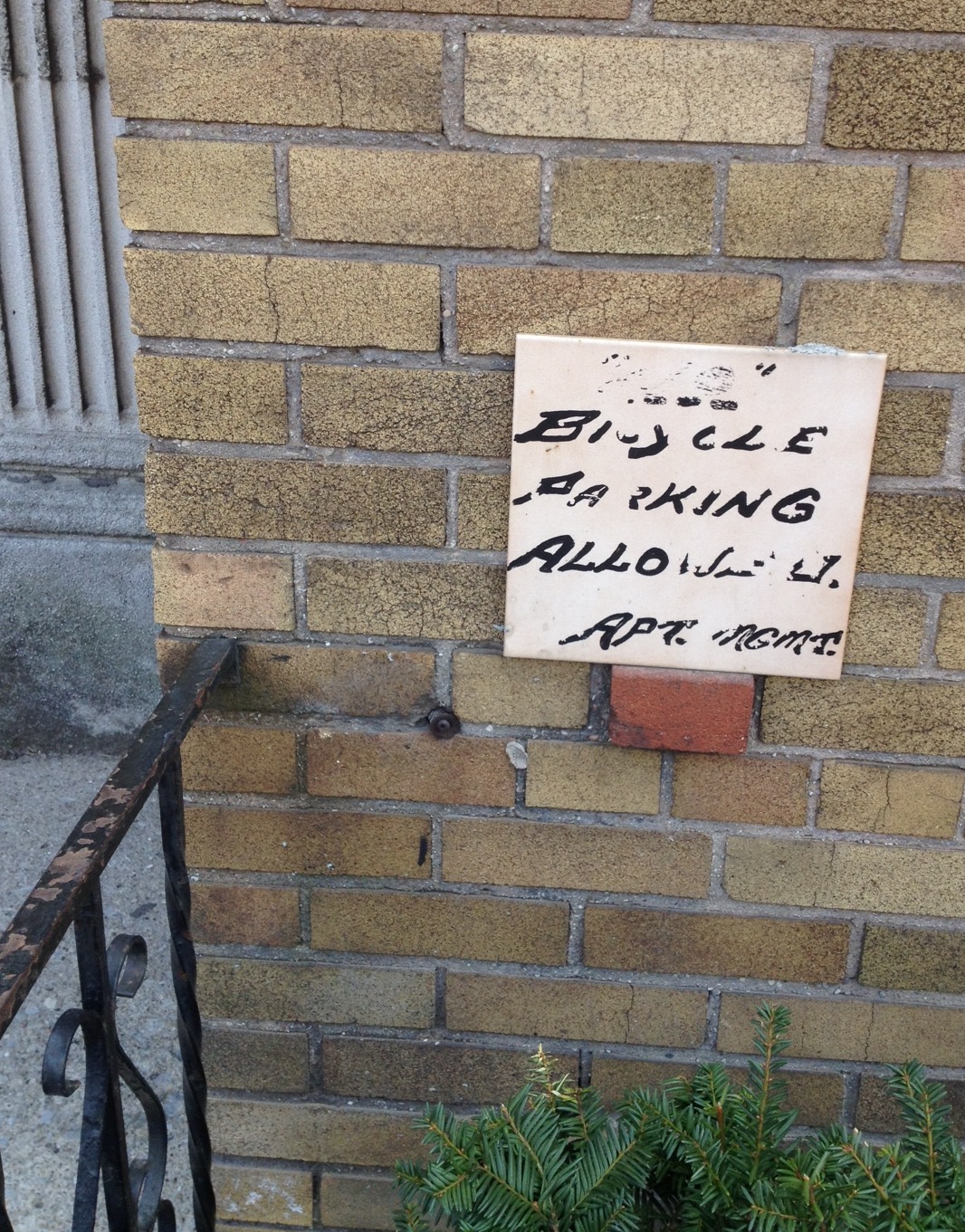
no_bicycles2This is a favourite from outside a low-rise apartment in my neighbourhood. I love it primarily on somewhat perverse aesthetic grounds. It reads:

“No” bicycle parking allowed.
Apt. Mgmt.

What’s so lovely about it? What’s not lovely about it!

First, there’s the unnecessary (indeed, inappropriate) quotation marks around the faded word “no.” Those are for when underlining just isn’t enough.

Next, there’s the old-timey hand-writing. It reminds me of my long-dead grandfather. Given that this is Little Portugal, I cannot help picturing an elderly, diminutive Portuguese Canadian man carefully painting those words.

Third is the fact that the sign is nearly illegible — and whoever posted it doesn’t think it important to fix it.

Beautiful!
no_bicycles

How wide is your vehicle?

no_wide_vehiclesThis one is from an alley near my home in Toronto. How many people do you think can tell you how wide their vehicle is, in metres?

No Parking: Snow Route

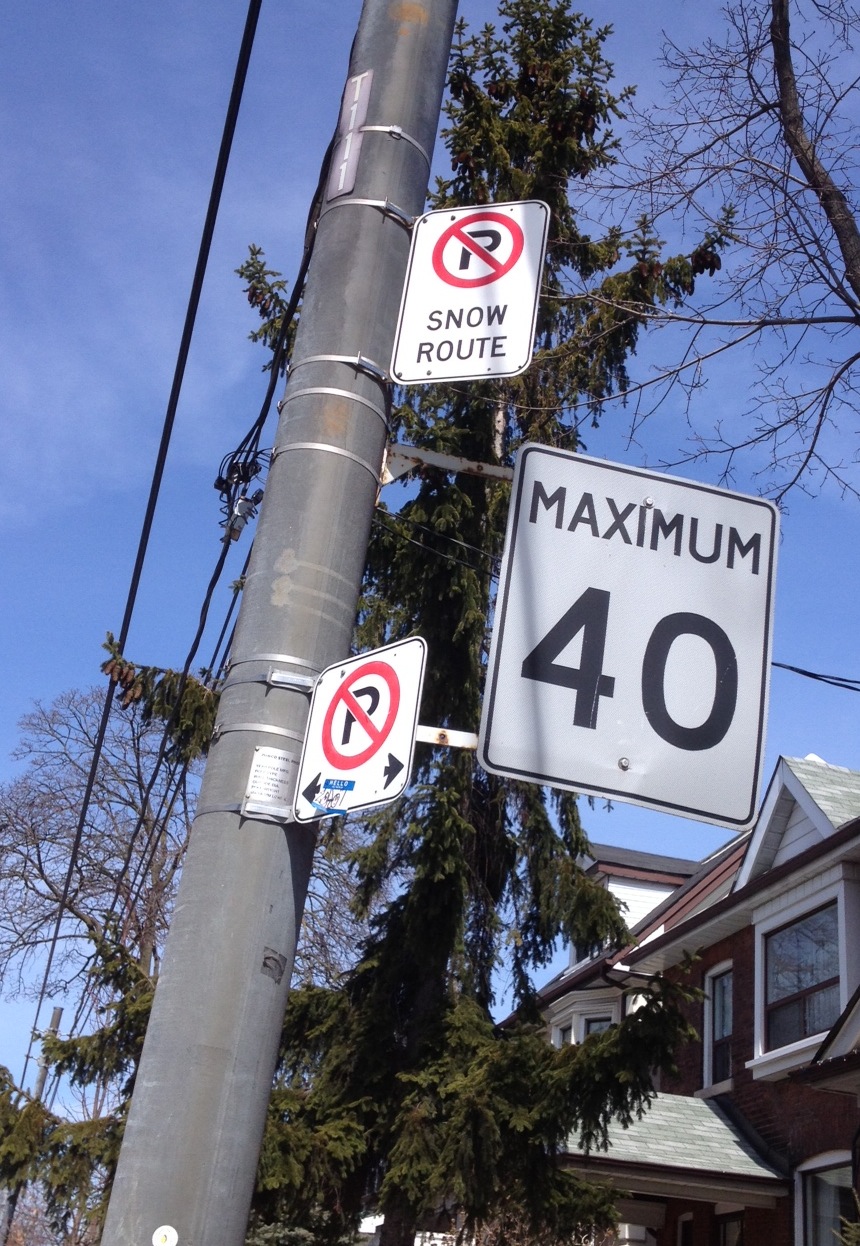
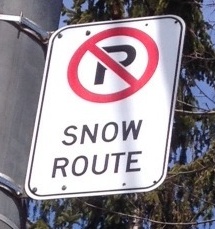
no_parking_snowThis is on a street in Toronto. Most of the lamp-posts along this street have “No Parking” signs. A few of them — maybe every third post — have additional signs saying why you’re not allowed to park there, namely because it’s a Snow Route, a road that gets priority snow-removal during especially big snowfalls.

In general, it’s helpful to let people know the rationale behind important policies, so they don’t fall prey to the assumption that those policies are arbitrary or stupid. It’s often hard to do that with street signs, where the obvious priority is to be brief.

snow_route

Be Considerate

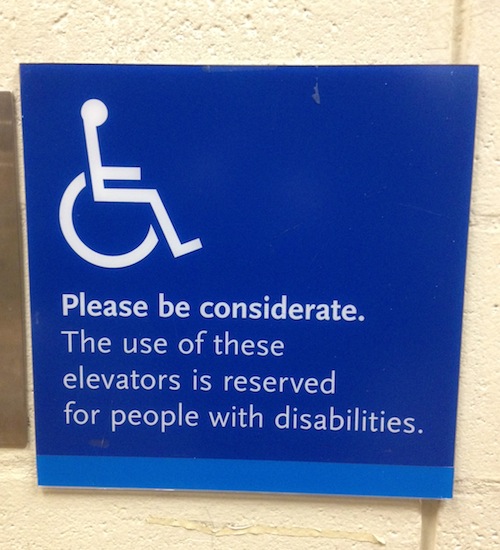
be_considerateThis one is of note for several reasons.

First, it’s beside the only elevator in a busy, 4-story university building. You can imagine how often this sign is ignored.

The second thing worth noting is the normative wording, the plea to “be considerate.” This frames the underlying injunction as a request to think about the needs of others — in particular, the needs of people with disabilities.

Third, note that of all the categories of people who might really need to use an elevator — the elderly, the pregnant, etc. — the sign-maker has chosen to single out people with disabilities.

Fourth, note that although the sign starts with a plea to “be considerate,” it next goes on to say something more categorical: “This elevator is reserved for people with disabilities.” [emphasis added]

Finally, an anecdote. When I asked at the building’s Help Desk how to get to a particular room, which happened to be in the basement, I was told to “take the elevator down one floor” (and no mention was made of a moderately obscure set of stairs that would also get be there.)